Hess research group

Research projects

You are here:

  1. TU Darmstadt
  2. Hess Research Group
  3. Research
  4. Projects

Catalysis for CO2 activation

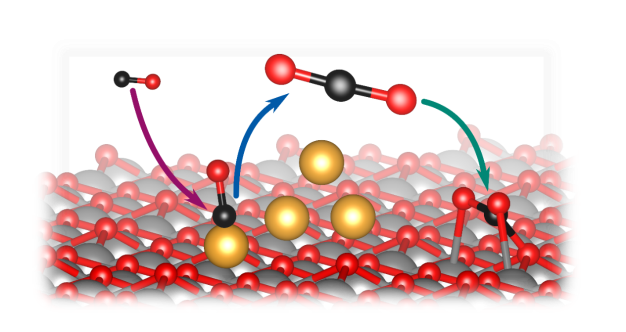
To reduce greenhouse gas emissions and to provide a sustainable source for the production of chemicals and fuels, CO2 should substitute fossil carbon as a C1 source. In this context, our research program is directed towards a detailed understanding of catalytic processes used for CO2 hydrogenation to syngas and methanol, by employing a combination of operando spectroscopy and DFT calculations. Syngas is obtained via the reverse water-gas shift reaction (rWGSR), allowing CO2 to be converted first to CO and then to liquid fuels via CO hydrogenation. Recently, we have been unraveled the mode of operation of rWGSR over Au/ceria catalysts using operando and transient approaches combined with DFT.

Learn more

Selective oxidation reactions

Because of their redox properties vanadia- and molybdena-containing catalysts are great interest in the context of selective oxidation reactions. Our research program focuses on the oxidative dehydrogenation (ODH) of short alkanes and alcohols, due to its relevance for technical applications, also from renewable sources. To develop a detailed mechanistic understanding, we apply a combination of operando multi-wavelength Raman-, UV-Vis- and IR spectroscopy. We explore the use and mode of operation of CO2 as oxidant in ODH reactions. Recently, we have elucidated the active participation of the support in propane ODH over VOx/CeO2 catalysts.

Learn more

Metal-oxide gas sensors

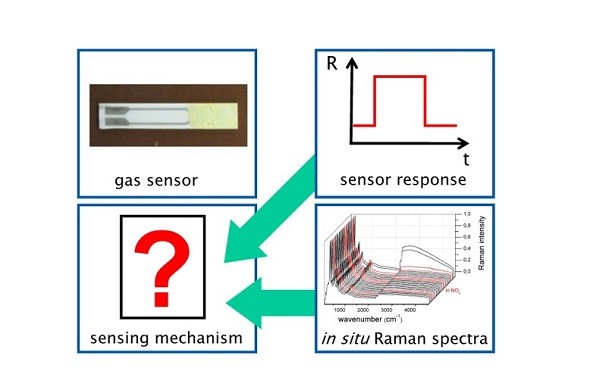
We study the metal-oxide gas sensing mechanism by correlating the sensor response with spectroscopic changes. For that purpose the sensor response to the target gas is measured simultaneously with different in situ and operando spectroscopic techniques (IR, Raman, UV/Vis). By changing the feeding gas composition, the sensor temperature, and the sensor properties we elucidate their influence on the sensing mechanism. Recently, we coupled the measurement of the sensor response with operando Raman, UV-Vis and IR gas phase analysis in one experiment.

Learn more

Li ion batteries

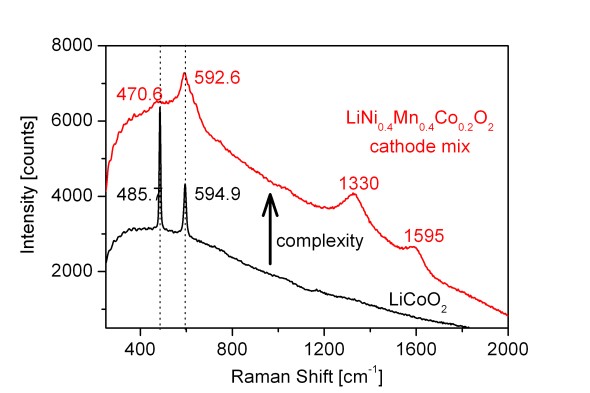
In situ and operando Raman diagnostics are employed to study the mode of operation and degradation mechanisms of cathode materials for secondary Li-ion batteries, which largely limit the power density and dominate the battery costs. The main focus is on the oxide materials LixMOy (M = Co, Ni, Mn) and LixV2O5. Wavelength-dependent Raman spectroscopy is used to study resonance effects. For combined bulk and surface characterization we have recently been coupling Raman spectroscopy with XPS.

Learn more

Operando / transient spectroscopy

We have ongoing activities in the development and application of new operando / transient spectroscopic approaches in the context of catalysis, gas sensors and batteries. Recently, we have started to explore the potential of modulation excitation spectroscopy (MES) in combination with phase-sensitive detection (PSD) to unravel the dynamics of surface reactions. Coupling of complimentary operando methods in one set-up allows for direct correlation of multiple structural changes (electronic/geometric, surface/bulk etc) with function.

Learn more

Rational material design

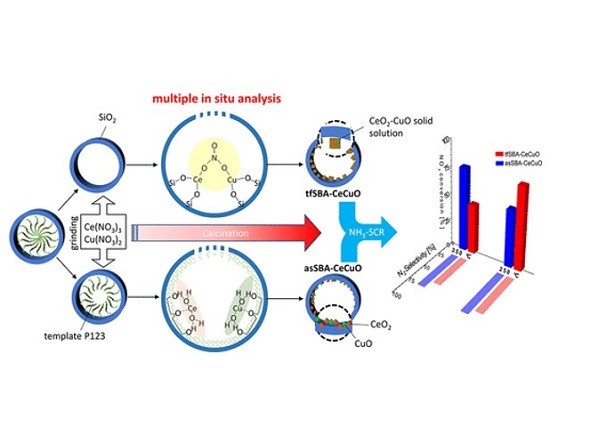
For controlled synthesis and nanoscale structuring of surfaces we employ chemical and physical processes, for example atomic-layer deposition (ALD). A unique feature of ALD is the possibility to form conformal uniform coatings on arbitrarily shaped materials with controlled atomic-scale thickness. We apply ALD to (porous) substrates with high specific surface areas thereby enabling novel applications, such as those in the fields of catalysis and alternative energy.

Learn more

  • Hess group at TU Darmstadt
  • Sitemap
  • Legal note
  • Accessibility
  • Privacy Policy
Go to top

We would like to customise the information and usability of this website to your preferences and needs. To this end, we use so-called cookies. Please choose which cookies you would like to enable when visiting our webpages.
Some of these cookies are required to load and correctly display this website on your device. These are strictly necessary or essential cookies and cannot be deselected.
The preferences cookie saves your language setting and preferred search engine, while the statistics cookie regulates how the open-source statistical software “Matomo” analyses your visits to and activities on our website.
For more information about cookies we use, please refer to our privacy policy.

Legal note